How we valet and clean heavily soiled vehicles
Some vehicles don’t see a valet in two or three months. Maybe longer. The dirt has stopped being dirt and started being part of the paintwork.
We see it often. School-run cars caked in crisp crumbs and juice spills. Work vans coated in months of road film. Family SUVs where the boot lining has absorbed every dropped chip and muddy boot since last summer.
Our superior valet exists for vehicles in that condition. It runs from £110 for smaller cars to £150 for larger SUVs and vans, covering interior and exterior in a single visit.
What heavy soiling actually means
A vehicle left for two or three months without a proper clean isn’t just dirty on the surface. Contamination has started bonding to paint, alloys, and fabric in ways a quick wash won’t shift.
Iron particles from brake dust have oxidised into the clear coat. Tar spots from summer roads have hardened. Old bird droppings will have started etching the lacquer beneath them, and tree sap does similar damage given enough sun.
Interiors tell a similar story. Sweat works into the seat fabric over time. Carpet grit sits below the level any household vacuum reaches. Dashboards develop a tacky film from sunlight breaking down the plasticisers, and ordinary wipes only spread it about.
Interior work
Rubbish comes out first. The full interior gets vacuumed, mats and boot included, before anything wet touches the fabric.
Seats and other fabric areas then get shampooed with wet extraction. Cleaning solution goes into the fibres under pressure, agitates, and gets drawn back out along with the dissolved grime before it can settle deeper.
The recovery tank usually fills with something the colour of weak tea. That’s months of accumulated grime that vacuuming was never going to touch, lifted out properly in one session.
Dashboard and interior trim see a good dusting and wipe down. Glass gets an ammonia-free treatment, both inside and out.
Exterior work
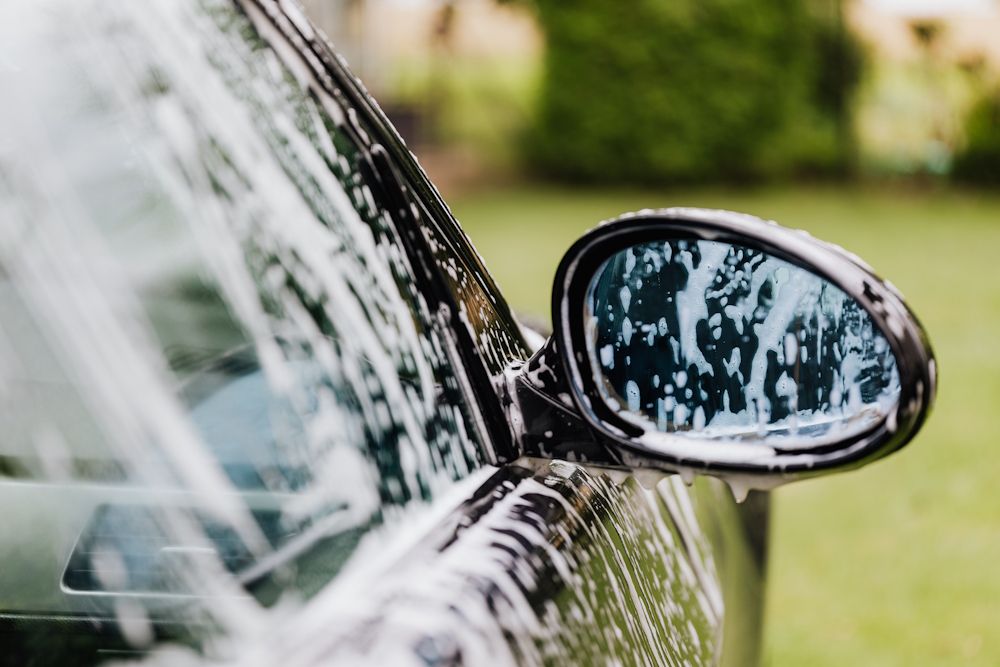
A pre-wash goes on first. Then, snow foam, then a contact wash using the two-bucket method.
Tar removal comes next. Solvent-based, applied panel by panel, lifting the black specks that cling to lower doors and rear quarters. Most heavily soiled cars carry hundreds of these without the owner realising.
Door shuts get cleaned properly. Most quick washes ignore them, which is why neglected cars often look smart from ten feet away and grubby the moment a door opens.
Wheels and finishing touches
Wheels are cleaned and the fallout removed. You’ll see the fallout remover bleed purple as it reacts with embedded brake dust, breaking the particles down chemically rather than abrasively.
The whole vehicle then gets a pure water rinse for a streak-free finish. We dress the tyres and plastic trim with a durable coating.
Engine bay degreasing
Underbonnet grime affects more than appearance. Oil mist mixed with road dust creates a coating that traps heat and makes leaks impossible to spot until they’ve become expensive.
A degreaser goes on cold surfaces, agitates through the worst of the build-up, and rinses off with controlled water pressure. Sensitive components stay covered throughout.
Ceramic foam finish
The final stage is a ceramic foam coating. It bonds to the cleaned paint and leaves a hydrophobic layer behind.
Water beads off rather than holding. Fresh dirt has less to grip onto. The coating lasts up to four weeks of normal driving and adds genuine depth to the colour underneath.
Booking
Book through SumUp to join our rewards programme and earn points toward a free valet. Monthly subscribers save five per cent on every visit they make.
Call us on 01262 392 100 or email service@a1valets.co.uk, Monday to Friday, 08:30 to 18:00. We cover Bridlington, Driffield, Scarborough, and everywhere within twenty miles of Carnaby Industrial Estate.